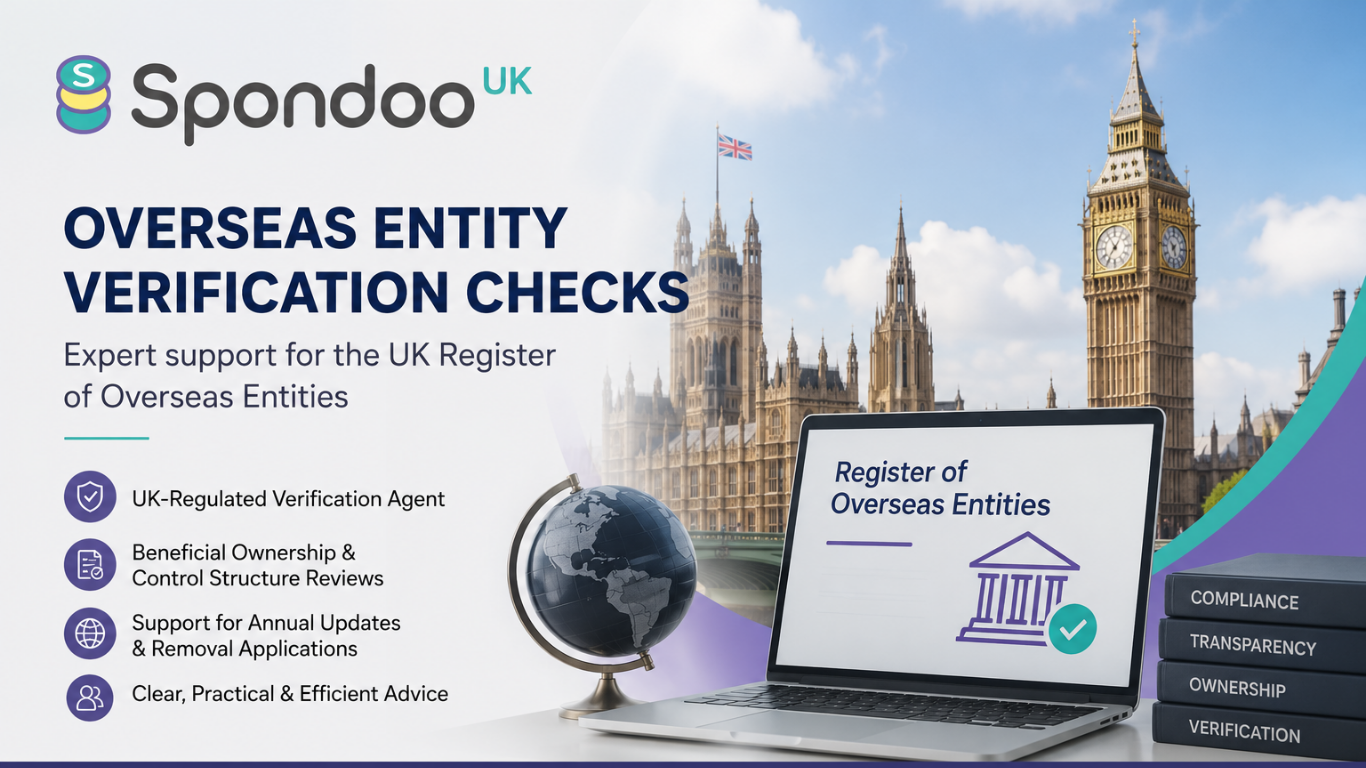
Overseas entities that own, buy, sell, or transfer UK property may need to comply with the UK's Register of Overseas Entities regime. This regime was introduced to improve transparency around the beneficial ownership of UK land and property held by non-UK legal entities.
As part of the process, information about the overseas entity, its beneficial owners and, where relevant, its managing officers must be verified before it is submitted to Companies House. These verification checks must be completed by a UK-regulated agent.
Spondoo is registered with Companies House for agent assurance purposes and can assist overseas entities with the required verification checks.
The Register of Overseas Entities is maintained by Companies House. It requires certain overseas legal entities that own or wish to own UK land or property to disclose information about:
Once registered, the overseas entity receives an Overseas Entity ID. This ID is often required when dealing with UK property transactions, including registrations at the relevant land registry.
Companies House does not simply accept beneficial ownership information without verification. Before an overseas entity can register, file its annual update statement, or apply to be removed from the register, the relevant information must be checked by a UK-regulated agent.
The purpose of these checks is to confirm, using appropriate evidence, that the information being submitted is accurate, complete and consistent with the underlying ownership and control structure.
This is particularly important where the structure includes companies, nominees, trusts, foundations, partnerships or other layered ownership arrangements.
A UK-regulated agent carrying out overseas entity verification checks must have an agent assurance code from Companies House.
The code confirms that the agent is authorised to carry out verification checks for the Register of Overseas Entities. It is used when submitting or supporting verification statements to Companies House.
Spondoo has obtained agent assurance registration and is able to assist clients with the verification process.
An overseas entity may need verification checks when it is:
This applies where an overseas entity owns, or intends to acquire, UK land or property within the scope of the regime.
Overseas entities must keep their register information up to date. Even where there have been no changes, an update statement is still required.
Where an overseas entity no longer owns UK land or property, it may need to apply for removal from the register, subject to the required checks.
Where ownership or control has changed, further verification may be required before updated information is filed.
The exact information required will depend on the ownership structure, but verification checks may include reviewing:
For more complex structures, additional evidence may be needed to trace ownership and control through each layer until the registrable beneficial owners are identified.
Verification checks can take time, particularly where documents must be obtained from overseas registries, translated into English, certified, or reviewed across several ownership layers.
Delays can affect property transactions, refinancing, disposals, annual update filings, and applications to remove an entity from the register. In some cases, failure to comply can also create restrictions on dealing with UK property.
Overseas entities should therefore begin the verification process well before a filing deadline or transaction completion date.
Spondoo can support overseas entities, advisers, property professionals and corporate service providers with the verification process.
Our aim is to make the process clear, structured and efficient while ensuring that the information submitted is properly supported by evidence.
Overseas entity verification is not a box-ticking exercise. The agent must understand the ownership structure, assess the evidence and consider whether the information is reliable.
At Spondoo, we take a practical but careful approach. Straightforward single-owner structures can often be reviewed quickly, while more complex arrangements involving trusts, nominee arrangements, multiple jurisdictions or corporate layers may require a more detailed review.
Where enhanced due diligence is required, we will explain what additional information is needed and why.
If your overseas entity owns UK property, is acquiring UK property, needs to file an annual update statement, or wishes to apply for removal from the Register of Overseas Entities, Spondoo can help with the required verification checks.
Contact Spondoo to discuss your overseas entity verification requirements and the documents needed to begin the process.
This article is for general information only and does not constitute legal advice. Overseas entities should seek legal advice where they are unsure about their obligations, property restrictions, trust arrangements or the legal effect of the Register of Overseas Entities regime.