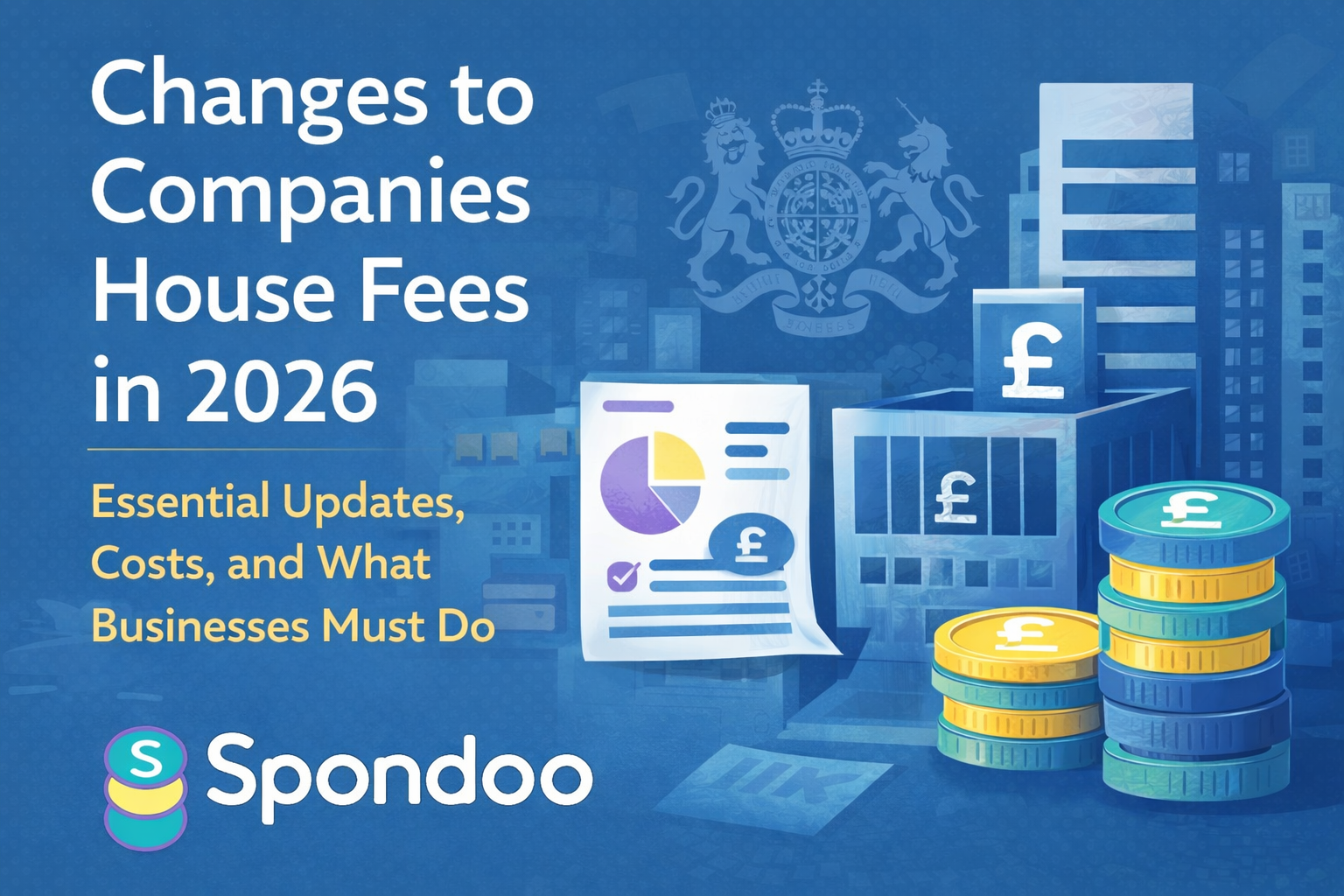
The Changes to Companies House fees coming into force on 1 February 2026 mark one of the most significant updates to the UK’s corporate filing system in recent years. These changes affect company incorporations, confirmation statements, LLP filings, overseas entities, partnerships, and search services.
Driven by the Economic Crime and Corporate Transparency (ECCT) Act 2023, the updated fee structure reflects Companies House’s expanded role in improving data accuracy, preventing fraud, and strengthening trust in the UK business environment. For businesses, professionals, and intermediaries, understanding these new fees is essential to budgeting correctly and staying compliant.
This article provides a complete, easy-to-understand breakdown of the new fees, explains why they are changing, and outlines what action you should take before February 2026.
Companies House has traditionally operated as a low-cost registrar. However, its responsibilities have expanded significantly under the ECCT Act 2023. The updated fees help fund:
Enhanced powers to query, reject, and remove false or misleading information
Improved identity verification systems
Greater enforcement against economic crime and company misuse
Secure, digital services that benefit legitimate businesses and consumers
According to Companies House, the information it maintains is worth billions of pounds to the UK economy, supporting lending decisions, contracts, and investment confidence.
A consistent theme across the Changes to Companies House fees is the encouragement of digital filing:
Digital filings are cheaper
Paper filings are significantly more expensive
Same-day services attract premium pricing
WebFiling
Find and update company information service
Approved software filing
Digital incorporation: £100
Same-day digital incorporation (software only): £156
Paper incorporation: £124
Confirmation statement (digital): £50
Confirmation statement (paper): £110
Change of company name (same day, digital): £85
Registration of a charge (digital): £14
Voluntary strike-off:
Digital: £13
Paper: £18
Administrative restoration (paper): £341
These figures clearly demonstrate the cost benefit of digital compliance.
LLPs face similar pricing structures:
LLP registration (digital): £100
LLP registration (same day, digital): £156
LLP registration (paper): £124
LLP confirmation statement:
Digital: £50
Paper: £110
LLP voluntary strike-off:
Digital: £13
Paper: £18
LLP administrative restoration (paper): £341
LLPs must also continue complying with registered email address and identity verification requirements.
UK establishment registration (paper): £124
Annual accounts:
Digital: £50
Paper: £110
All filings must be digital, except where protected status applies.
Registration (digital): £250
Registration (paper): £528
Update fee:
Digital: £134
Paper: £268
Application for removal:
Digital: £301
Paper: £602
The steep paper fees strongly discourage non-digital submissions.
Limited partnership registration (paper): £124
Scottish limited partnership “annual fee”:
Digital: £110
Paper: £110
Designation as a private fund LP: £30
Scottish qualifying partnership registration: £124
CIC incorporation (digital): £115
CIC incorporation (paper): £139
Certified documents (same day): £65
Certified documents (standard): £22
Additional certificates: £16
ACSP registration (digital): £63
All new fees apply from 1 February 2026.
Yes. In almost every category, digital filings cost significantly less than paper submissions.
No. Incorporation fees apply only to new entities.
Yes, but paper filings attract much higher fees and may face longer processing times.
The increases fund enhanced enforcement, fraud prevention, and data integrity measures under the ECCT Act 2023.
As part of the wider Companies House reforms, identity verification has become a key compliance requirement for company directors, LLP members, and people with significant control (PSCs).
Spondoo Accountants provide identity verification as a managed service, helping clients complete the process accurately and efficiently as part of their ongoing compliance.
Rather than navigating new systems, personal codes, and role-based requirements yourself, our team can handle the verification process and ensure it is properly aligned with your Companies House filings.
Our identity verification support is designed to:
Fit seamlessly alongside confirmation statements and other filings
Reduce administrative burden for directors and business owners
Provide a clear, organised approach for companies with multiple individuals
Support clients as requirements evolve under the ECCT Act
This service is particularly useful for growing businesses, groups with several directors or PSCs, and clients who prefer their compliance handled professionally in one place.
If you would like identity verification managed as part of your Companies House support, Spondoo Accountants can assist.
The Changes to Companies House fees represent a decisive shift toward a digital-first, transparency-focused corporate system in the UK. While costs are increasing, they support stronger protections for legitimate businesses and a more trustworthy marketplace.
By understanding the new fees, embracing digital filing, and complying with identity verification requirements, businesses can adapt smoothly and avoid unnecessary penalties.
Spondoo Accountants support businesses with a full range of Companies House services, helping clients stay compliant as regulations and fees change.
We assist with:
Company incorporations and changes
Confirmation statements
LLP and partnership filings
Identity verification requirements
Ongoing Companies House and statutory compliance
With Companies House fees increasing from 1 February 2026 and a stronger focus on digital filing and identity checks, many businesses choose to have these obligations handled by their accountants to save time and keep everything organised.
Whether you’re preparing for the new fee structure, managing regular filings, or want peace of mind that everything is handled correctly, we can take care of it for you.